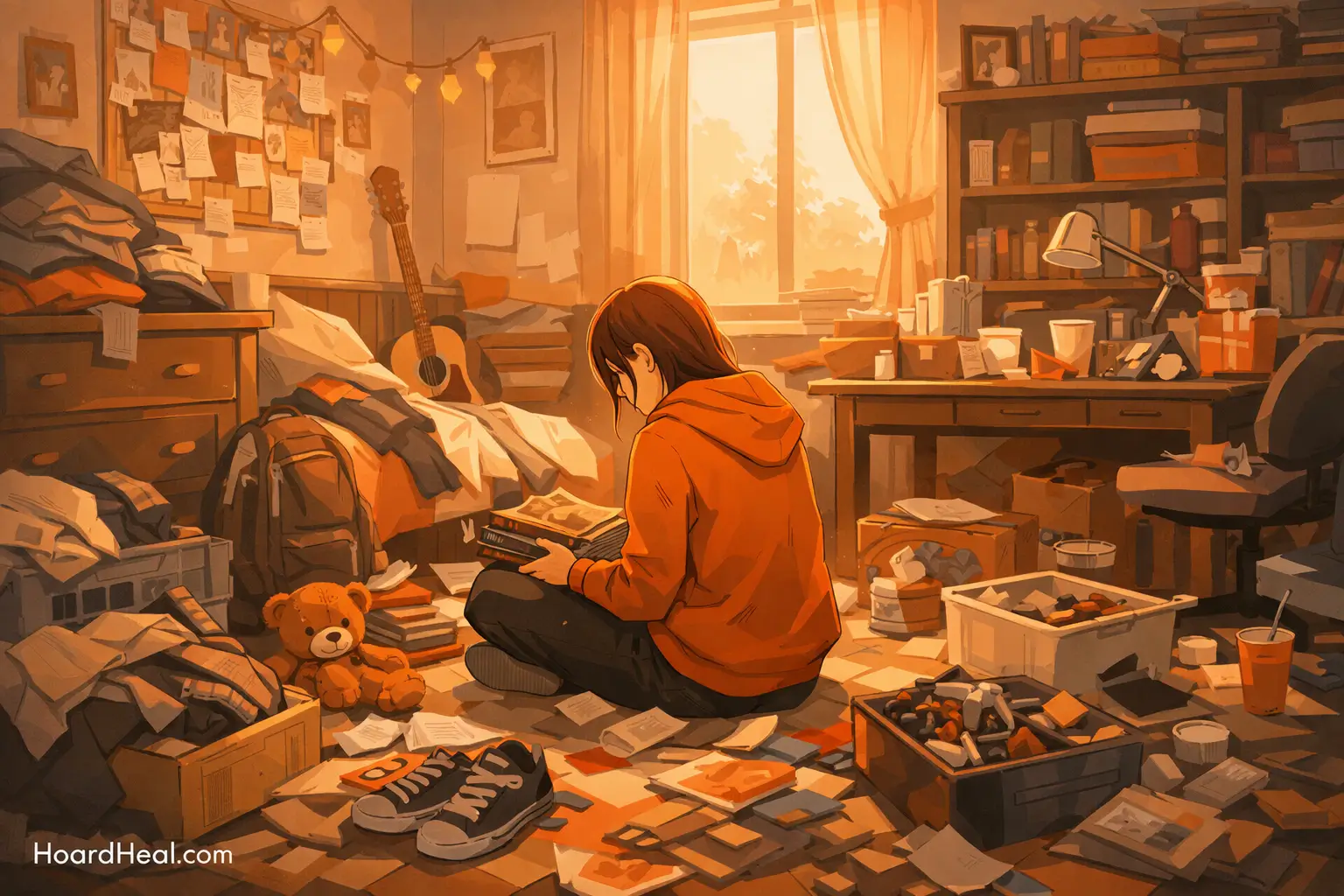
Early Signs of Hoarding Disorder in Teenagers: What Parents Should Watch For
A detailed guide for parents, caregivers, and educators
Hoarding disorder does not suddenly appear in adulthood. In many cases, it begins quietly during the teenage years. At first, the behaviors may look harmless. A messy bedroom. Boxes of old school papers. Clothes that no longer fit but “might be useful someday.” However, over time, these small patterns can grow into something more serious.
Understanding the early signs of hoarding disorder in teenagers is important. The earlier you recognize the warning signals, the easier it is to intervene gently and effectively. Early support can reduce long-term distress, protect family relationships, and prevent severe clutter from developing in adulthood.
In this post, we will explore what hoarding disorder is, why it often begins in adolescence, and the specific early signs you should watch for. Each section will go deep so you can clearly understand what is normal teenage behavior—and what may signal a deeper issue.
What Is Hoarding Disorder?
Hoarding disorder is a mental health condition characterized by persistent difficulty discarding or parting with possessions, regardless of their actual value. This difficulty is driven by a strong perceived need to save items and intense distress when attempting to discard them.
It is officially recognized in the Diagnostic and Statistical Manual of Mental Disorders (DSM-5), published by the Diagnostic and Statistical Manual of Mental Disorders. The condition is different from simple messiness or collecting. A collector organizes and displays items with pride. A person with hoarding disorder accumulates items in a way that overwhelms living spaces and creates dysfunction. [1]
In teenagers, the signs are often less extreme than in adults. Rooms may not yet be unsafe or filled floor-to-ceiling. However, the emotional attachment and distress patterns usually start much earlier.
Why Hoarding Often Begins in the Teenage Years
Adolescence is a time of emotional intensity, identity formation, and increased independence. Teenagers begin making more decisions about what to keep, what to buy, and what defines them. During this stage, possessions often become linked to identity.
For example, a concert ticket may not just be paper. It may represent belonging. A childhood toy may represent safety. Old homework assignments may represent achievement. Because of this, letting go of objects can feel like losing parts of themselves.
Research consistently shows that hoarding behaviors often begin between ages 11 and 15. However, the behaviors may not become severely impairing until adulthood. This delay is important. It means early signs are often missed or dismissed as “just teenage behavior.”
Therefore, understanding the difference between typical teen clutter and emerging hoarding is critical.
Sign 1: Extreme Emotional Attachment to Ordinary Objects
Most teenagers feel attached to certain belongings. That is normal. However, a red flag appears when the attachment is intense, rigid, and not proportional to the object’s value.
For example, a teen might:
- Refuse to throw away broken pencils
- Keep empty food wrappers because they are “memories”
- Save outdated school papers with no intention of reviewing them
- Become visibly distressed when asked to discard worn-out clothing
The key factor is emotional intensity. If discarding an item triggers panic, anger, or deep sadness, this may signal more than simple nostalgia.
Furthermore, the attachment often extends to random, low-value items—not just meaningful keepsakes. That is a major distinction.
Sign 2: Severe Distress When Asked to Clean or Declutter
Many teens dislike cleaning their room. However, with hoarding tendencies, the reaction goes beyond typical resistance.
Instead of mild annoyance, you may notice:
- Emotional meltdowns
- Crying or panic attacks
- Accusations that parents are “destroying” their life
- Strong fear that they will “need it someday”
This distress is not about laziness. It is about anxiety. The thought of losing possessions feels unsafe. The teen may genuinely believe that discarding items will lead to regret, loss, or future harm.
Over time, family conflict may increase. Parents may push harder. The teen may withdraw further. This cycle can deepen the problem if not handled carefully.
Sign 3: Difficulty Making Decisions About Possessions
Decision-making is often impaired in individuals with hoarding disorder. Teenagers may struggle to categorize items or decide what is trash.
You might hear statements like:
- “I don’t know where it should go.”
- “What if I need it later?”
- “I’ll decide later.”
As a result, piles begin forming. Items are moved from one spot to another but never truly sorted.
Importantly, this indecisiveness is not limited to possessions. Many teens with hoarding tendencies also struggle with general decision-making. They may avoid choices altogether to reduce anxiety.
This avoidance reinforces accumulation. If you never decide, you never discard.
Sign 4: Excessive Saving of Free or Low-Value Items
Another early sign is the persistent collecting of free materials.
For example:
- Taking extra napkins, straws, or condiment packets
- Saving packaging materials
- Bringing home discarded items from school
- Keeping broken electronics “for parts”
On the surface, this may look like resourcefulness. However, the pattern becomes concerning when the teen accumulates far more than they could reasonably use.
The underlying belief is often, “It might be useful someday.” This future-oriented fear drives the saving behavior.
In addition, there is usually little follow-through. The saved items rarely get used.
Sign 5: Clutter That Interferes With Functioning
Messiness alone is not hoarding. However, clutter that interferes with daily life is a serious warning sign.
In teenagers, this may look like:
- A bed covered in items, forcing them to sleep elsewhere
- A desk so cluttered that homework cannot be completed there
- Difficulty finding important items like school assignments
- Avoiding inviting friends over due to embarrassment
When clutter affects sleep, studying, or social life, it is no longer harmless disorganization. It is impairing daily functioning.
Early intervention at this stage can prevent long-term damage.
Sign 6: Strong Sentimental Attachment to Childhood Items
It is normal for teens to keep some childhood belongings. However, an early hoarding pattern often includes refusal to let go of almost all childhood items.
For example:
- Toys from early elementary school
- Outgrown clothes from years ago
- Art projects from every grade
The attachment is often linked to safety and identity. Adolescence is a time of rapid change. Holding onto childhood objects may feel like holding onto stability.
However, when the teen becomes distressed at the idea of donating or storing items elsewhere, it may signal deeper emotional dependency.
Sign 7: Avoidance and Withdrawal
As clutter increases, shame often follows. Teenagers may start closing their bedroom door more often. They may avoid having friends visit. They may become defensive if anyone comments on their space.
This avoidance protects them from judgment. However, it also reinforces isolation.
In some cases, teens may not recognize the clutter as problematic. In others, they may feel overwhelmed and stuck but unsure how to fix it.
Either way, social withdrawal combined with clutter is an important pattern to notice.
Sign 8: Family History of Hoarding
Hoarding disorder has a genetic component. If a parent or close relative struggles with hoarding, the risk increases.
In fact, studies suggest that hoarding behaviors cluster in families. This does not mean a teen will automatically develop the disorder. However, awareness becomes even more important in households where clutter is already normalized.
Additionally, modeling plays a role. If children grow up seeing adults save everything “just in case,” they may adopt similar beliefs.
Sign 9: Strong Beliefs About Waste and Responsibility
Some teenagers develop rigid beliefs about waste. They may feel morally responsible for saving items to prevent environmental harm or financial loss.
While environmental awareness is positive, the belief becomes problematic when:
- It leads to excessive saving
- It causes guilt when discarding broken items
- It prevents normal decluttering
The thought pattern often sounds like: “Throwing this away is wrong.” This moral framing can make discarding feel unethical rather than practical.
Sign 10: Anxiety and Perfectionism
Hoarding rarely exists in isolation. Many teens who show early hoarding signs also struggle with anxiety disorders, depression, or perfectionism.
For example:
- They may keep school papers because they fear losing proof of achievement.
- They may avoid organizing because they feel it must be done perfectly.
- They may save items to reduce uncertainty about the future.
Perfectionism can paralyze decision-making. If sorting cannot be done “the right way,” it may not be done at all.
Therefore, addressing underlying anxiety is often essential in early intervention.
Normal Teen Mess vs. Early Hoarding: A Comparison
Below is a simple comparison to help clarify the difference.
| Normal Teen Mess | Early Hoarding Warning Signs |
|---|---|
| Temporary clutter | Persistent accumulation |
| Mild resistance to cleaning | Intense emotional distress |
| Keeps meaningful items | Keeps large amounts of low-value items |
| Can discard when necessary | Feels unable to discard |
| Room messy but usable | Space becomes unusable |
This distinction is important. Not every messy teenager has hoarding disorder. The emotional component is what matters most.
Why Early Intervention Matters
Hoarding disorder tends to worsen over time. Without support, clutter accumulates slowly and steadily. By adulthood, it can lead to unsafe living conditions, financial problems, and strained relationships.
However, adolescence offers a window of opportunity. Habits are still forming. Beliefs are still flexible. With proper support, teens can learn healthier decision-making skills before patterns become deeply ingrained.
Early intervention may include:
- Gentle conversations about feelings attached to items
- Teaching decision-making frameworks
- Gradual exposure to discarding
- Cognitive behavioral therapy (CBT)
Importantly, forcing clean-outs often backfires. Sudden removal of possessions can increase trauma and mistrust. Compassion and patience are far more effective.
How to Approach a Teen Showing Early Signs
If you recognize these signs in your teenager, approach carefully.
First, avoid shaming language. Words like “gross,” “lazy,” or “crazy” can damage trust. Instead, focus on concern for their comfort and well-being.
Second, ask open-ended questions. For example:
- “What makes this item important to you?”
- “How would you feel if we stored this somewhere else?”
- “What worries you about letting this go?”
Third, set small goals. Instead of cleaning the entire room, start with one drawer. Small wins build confidence.
Finally, consider professional help if distress is severe. Therapists trained in hoarding disorder understand the emotional complexity behind saving behaviors.
Final Thoughts
Hoarding disorder in teenagers often begins quietly. It can look like stubbornness, laziness, or simple messiness. However, when you look deeper, you will often find anxiety, fear of loss, and emotional attachment driving the behavior.
The early signs include intense distress over discarding, excessive saving of low-value items, indecisiveness, clutter interfering with daily life, and withdrawal due to shame.
The good news is this: early awareness makes a powerful difference. When families respond with empathy instead of force, teens are more likely to open up. When anxiety is addressed early, long-term outcomes improve.
If you suspect early hoarding tendencies, do not panic. Instead, stay observant, stay calm, and focus on building understanding.
Small conversations today can prevent overwhelming clutter tomorrow.