How Bad Does Hoarding Have to Be Before It’s a Problem?
The honest answer is more complicated — and more compassionate — than you’d expect.
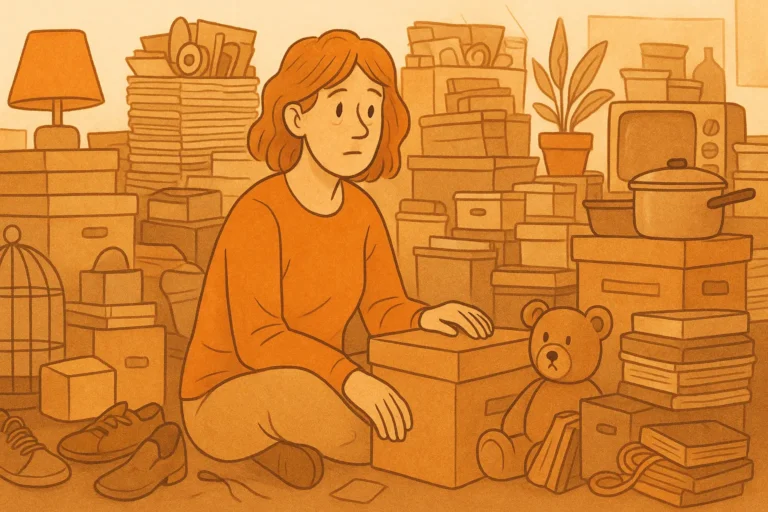
Let’s start with a confession. Right now, somewhere in your home, there’s probably a drawer you don’t open in front of guests. Maybe it’s stuffed with takeout menus from restaurants that closed three years ago, dead batteries you keep “in case,” and a phone charger for a device you no longer own. You know the drawer. We all have one.
And maybe there’s a room that’s gotten a little out of hand. A “project pile” in the corner of the bedroom. A garage where the car hasn’t parked in two years. A spare room that’s become a staging ground for things you swear you’ll deal with “later.”
So at what point does that cross a line? When does “I like to keep things” become something more serious? When does the person who saves magazines become the person who needs help? These aren’t just casual questions — they’re questions that mental health researchers have been working to answer with increasing urgency over the past two decades, and the answers are both more scientifically fascinating and more humanely nuanced than the reality TV version of hoarding has led most of us to believe.
Let’s go deep on this. Because it deserves more than a surface skim.
First, Let’s Establish What Hoarding Actually Is
Before we can talk about “how bad is bad enough,” we need to get clear on what hoarding disorder actually is — because there’s a massive difference between being a packrat and having a clinical condition.
The American Psychiatric Association didn’t even formally recognize hoarding disorder (HD) as its own distinct diagnosis until 2013, when the DSM-5 was published. Before that, hoarding behaviors were largely categorized as symptoms of obsessive-compulsive disorder (OCD) or obsessive-compulsive personality disorder (OCPD). Getting its own diagnostic category was a big deal — it meant the research community finally acknowledged that this is a unique psychological phenomenon with its own profile, its own brain signatures, and its own treatment needs.
According to the DSM-5, to meet the diagnostic criteria for hoarding disorder, a person must demonstrate all of the following:
- Persistent difficulty discarding or parting with possessions, regardless of their actual value
- The difficulty stems from a perceived need to save items and distress over discarding them — not just forgetting to throw things out
- The resulting accumulation clutters and congests living areas, preventing them from being used for their intended purpose
- The hoarding causes clinically significant distress or impairment in social, occupational, or other important areas of functioning
- The hoarding is not due to another medical condition (like brain injury or Prader-Willi syndrome)
- The hoarding is not better explained by another mental disorder — for example, hoarding secondary to OCD is a different clinical picture
That fifth and sixth criteria are doing a lot of work. They’re the reason the diagnosis is harder to apply than it looks, and the reason a clinician’s assessment always matters more than a quiz you find on the internet.
The Spectrum: From Clutter to Crisis
Here’s one of the most important things to understand: hoarding exists on a spectrum. It doesn’t just flip on like a switch one day. It builds. Slowly. Often invisibly, even to the person living inside it.
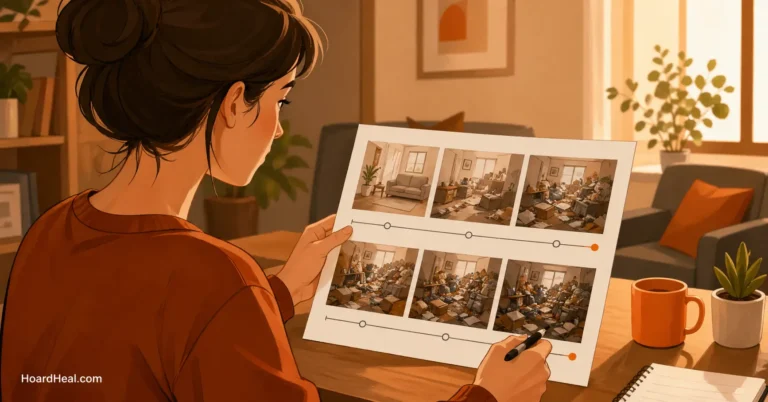
Researchers and clinical practitioners have developed what’s known as the Clutter-Hoarding Scale, a five-level model used as a practical risk and safety assessment tool. It was developed by the Institute for Challenging Disorganization and has become widely used in community interventions. Let’s walk through it honestly:
Level 1 looks a lot like most people’s homes on a bad week. There’s clutter, but all doors and windows open freely. No odors, no hazards. You might feel embarrassed if someone dropped by unexpectedly, but a good cleaning session would resolve it. This is not hoarding disorder. This is just life.
Level 2 is when things start to get more complicated. There’s one blocked exit or stairway. Light pet odors or evidence of pests. A bathroom or kitchen that’s harder to use than it should be. A slight sense that things are creeping beyond control. At this level, most people still don’t meet clinical criteria — but there’s a pattern that might be worth paying attention to.
Level 3 is where clinicians begin to sit up straighter. Structural damage may be present. There are visible mold issues, significant clutter in sleeping areas, and multiple areas of the home that can’t be used as intended. The person is likely spending significantly more than typical effort managing their environment, and the clutter is actively interfering with daily life. This is where distress often becomes more apparent.
Level 4 marks a serious safety threshold. Utilities like water or sewer may not be functioning. Rotting food is present. Pets may be in poor health. The structure of the home itself may be compromised. At this stage, there are significant public health and safety risks.
Level 5 is the extreme cases you’ve seen on television — structural failure risk, fire hazards so severe that the home is legally uninhabitable, human waste, animals living in conditions of significant neglect.
It’s crucial to remember that someone can meet the clinical criteria for hoarding disorder at Level 2 or 3 — nowhere near the level 5 spectacle the media loves to feature. The clinical diagnosis is about the psychological experience, not the volume of stuff. And this matters enormously.
The Collecting Vs. Hoarding Distinction (This One Trips Everyone Up)
“But they have so much stuff!” isn’t the definition of hoarding. This is where so many people — including well-meaning family members — get confused.
Collectors can acquire vast quantities of items without having hoarding disorder. The distinguishing features aren’t about quantity at all. They’re about function, organization, distress, and impairment.
A collector of vintage vinyl records may have thousands of albums. They can still cook in their kitchen, sleep in their bed, invite friends over, and choose to sell an album if they want to. Their collecting brings them joy and doesn’t interfere with their ability to live their life. Their possessions are organized according to a system that makes sense to them.
A person with hoarding disorder, by contrast, has items organized in a way that doesn’t support functioning — and the critical word there is can’t, not won’t. Discarding feels emotionally unbearable. As researchers have noted, a person with hoarding disorder might not want to throw away an old takeout container because it holds a memory of a significant moment, and the thought of losing that container feels like losing the memory itself. The emotional weight attached to objects is categorically different from a collector’s attachment.
While collectors may acquire and display large numbers of items, their possessions are generally well-organized, and the activity doesn’t impair their functioning. That last part — impairment — is doing the heavy lifting in the diagnosis.
What the Numbers Actually Tell Us
Let’s talk prevalence for a moment, because the scale of this is genuinely surprising.
A systematic review and meta-analysis examining 11 studies with a combined sample of 53,378 participants found a pooled estimated prevalence for hoarding disorder of 2.5%, with rates being similar for both males and females. That’s 1 in 40 people — a number that becomes staggering when you scale it to the U.S. population, suggesting roughly 8 to 9 million Americans may meet clinical criteria.
But wait — it’s messier than that single number suggests. Prevalence estimates have widely ranged from between 1.5% and 6% of the general population, due to methodological differences across studies. The variation makes sense when you consider how difficult it is to assess hoarding accurately. Many people with the disorder don’t seek treatment. Many aren’t aware they have it. And many studies have used inconsistent criteria.
What the research does agree on is age. Hoarding was found to be almost three times more prevalent in individuals over the age of 54 years than in individuals aged 34 to 44 years. This is consistent with what clinicians observe: hoarding tends to develop in early-to-mid adolescence but accumulates — in every sense — across decades. A recent meta-analysis found that the mean age of onset of hoarding symptoms across studies was 16.7 years, and severity of hoarding symptoms tended to worsen over time. In other words, the problem rarely appears suddenly in someone’s 60s. It started much earlier. It just took that long to become impossible to ignore.
What’s Actually Happening in the Brain
This is the part that fundamentally changes how you think about hoarding — and how you respond to someone you love who struggles with it. Because what the neuroscience reveals is that for people with hoarding disorder, the act of making a decision about whether to keep or discard an object is neurologically different. Not “they’re being dramatic.” Actually, measurably, neurologically different.
Researchers have used fMRI technology — functional magnetic resonance imaging, which captures brain activity in real time — to study what happens inside the brains of people with hoarding disorder when they have to decide whether to keep or throw something away.
A landmark study published in JAMA Psychiatry examined neural mechanisms of decision making in hoarding disorder by comparing HD patients, OCD patients, and healthy controls during decisions to keep or discard personal possessions and control possessions. Participants with hoarding disorder exhibited abnormal activity in the anterior cingulate cortex and insula that was stimulus dependent — specifically, when deciding about items that belonged to them, these regions showed excessive fMRI signals compared with the other two groups, and these differences in neural function correlated significantly with hoarding severity and self-ratings of indecisiveness.
To translate that into plain language: the part of the brain responsible for emotional regulation, decision-making, and identifying what matters — it lights up abnormally, excessively, when a person with hoarding disorder is trying to decide whether to keep a piece of junk mail. It’s not that they don’t care about the decision. It’s that they care about it with an intensity that neurologically resembles how you might feel deciding whether to give up your car or your house.
The largest fMRI study to date, published in Neuropsychopharmacology, compared 79 adults with DSM-5 hoarding disorder against 44 non-HD controls. HD brain activation profiles prominently featured insular and anterior cingulate cortex dysfunction, linking the defining behavioral symptoms of hoarding disorder to localized brain dysfunction within cingulo-opercular brain systems.
Earlier work published in Depression and Anxiety had already pointed to something similar: when deciding about whether to keep or discard personal possessions, compulsive hoarding participants displayed excessive hemodynamic activity in the lateral orbitofrontal cortex and parahippocampal gyrus — brain regions associated with emotional processing and memory encoding.
Memory. That’s the key word there. The parahippocampal gyrus is associated with memory context. For people with hoarding disorder, objects are not just objects — they are memory-encoded artifacts that trigger a neurological response far more intense than most of us experience when looking at the same item. When they tell you “I might need this someday” or “this is important to me,” they’re not rationalizing. Their brain is genuinely generating a distress signal proportional to losing something meaningful.
This doesn’t mean the behavior isn’t harmful. It absolutely can be. But it does mean that “just throw it out, it’s easy” is neurologically inaccurate — and about as helpful as telling someone with a broken leg to “just walk it off.”
The Comorbidity Problem: Almost Never Just Hoarding
One of the most clinically important facts about hoarding disorder is that it rarely travels alone. More than 60% of people with clinically significant hoarding meet the criteria for at least one co-occurring psychiatric disorder, with studies reporting particularly high rates of major depressive disorder (50–52%), generalized anxiety disorder (24%), and social phobia (23%).
Read those numbers again. More than half of people with hoarding disorder also meet criteria for major depression. That’s not a coincidence. The relationship between depression and hoarding is bidirectional and complex: depression can sap the energy and motivation required to process possessions and make decisions, and living in an environment of escalating clutter can deepen isolation, shame, and hopelessness. They feed each other.
A large-scale network analysis using data from the Brain Health Registry (N = 15,978) found that ADHD, major depressive disorder, and OCD form a triad of psychiatric disorders directly associated with hoarding disorder, while the associations among anxiety disorders and HD were surprisingly weak or indirect.
The ADHD connection is particularly important and underappreciated in public conversations about hoarding. Executive function deficits — difficulty with categorization, task initiation, decision-making under ambiguity, and working memory — are central to the ADHD experience and directly interfere with the cognitive work required to organize, process, and discard possessions. When ADHD and hoarding disorder co-occur, as they frequently do, the challenges compound each other in ways that make standalone “decluttering advice” almost useless.
There’s also a neurological dimension that often gets overlooked. Approximately 12% of those with Parkinson’s disease display excessive hoarding, while 15% with focal brain lesions have abnormal collecting behaviors. Additionally, 26% of participants with hoarding in the Brain Health Registry also reported a history of traumatic brain injury or concussions. This reinforces the understanding that hoarding is not simply a personality quirk or a bad habit — in many cases, it’s a symptom of something happening in the brain’s structural or functional architecture.
The Insight Problem: Not Knowing What You Don’t Know
Here’s one of the cruelest features of hoarding disorder: a significant portion of people who have it don’t recognize that they have a problem. Or they recognize it only partially — they’ll acknowledge “things have gotten a little out of hand” while being unable to comprehend why friends and family are so alarmed.
This lack of insight — called “anosognosia” in clinical terms — is distinct from denial. Denial implies a conscious recognition that something is wrong and a choice to pretend otherwise. Poor insight in hoarding disorder reflects a genuine deficit in the person’s ability to accurately perceive the severity of their situation. And research suggests it’s common. Clients served by hoarding service providers are less likely to have good or fair awareness of the severity of their hoarding behaviour and its potential risks.
This creates a profound ethical and practical problem for families and professionals: how do you help someone who doesn’t believe they need help? Who may become distressed, defensive, or hostile when their possessions are threatened? Whose possessions may represent genuine emotional anchors in lives marked by loss, trauma, or isolation?
In clinical experience, people who hoard have sometimes reported a preference for being alone with their objects, indicating more reliable relationships with objects than with people. That line should stop you in your tracks. Because it’s not pathetic — it’s often heartbreaking. Possessions, for many people with hoarding disorder, have become stand-ins for connection, safety, or identity in ways that can’t simply be argued or organized away.
The Safety Line: When “Their Choice” Becomes Everybody’s Problem
There’s a libertarian argument that people should be allowed to live however they choose in their own homes, and up to a point, that’s a reasonable position. But hoarding disorder — particularly at moderate to severe levels — has a habit of crossing beyond the individual into shared risk.
Let’s talk about fire, because the data here is genuinely alarming.
A study by Lucini and colleagues found that 60% of hoarding-related fires spread beyond their source, in contrast with only 10% of non-hoarding fires. Think about what that means structurally: in a typical home fire, the fire stays roughly contained. In a home with significant hoarding, the fuel load — the accumulated combustibles — is so extensive that the fire propagates at a rate that’s almost impossible to manage.
A study examining over 5,000 residential fires in Mississippi found that probable hoarding fires were more likely to have at least one individual injured (8.3% vs 5.2%) and to have one or more deaths (4.2% vs 2.1%) compared to fires not linked to hoarding.
The accumulation of materials collected by people with hoarding disorder presents fire safety risks not just to residents but to firefighters as well — with blocked windows and doors making it difficult for first responders to get into the home to fight the fire and search for occupants.
And it’s not just fire. Severe hoarding behavior can also result in degradation of the home, with routine maintenance neglected and homes becoming squalid, moldy, pest-infected, or structurally unsound because of excessive weight. For older adults in particular — who are disproportionately affected by hoarding — the risks include falls, medication mismanagement from buried prescriptions, inadequate nutrition when kitchens become inaccessible, and profound social isolation.
High piles of objects at risk of toppling over, narrow pathways that hinder access for emergency responders, and combustibles such as newspapers or clothing piled near heat sources are core safety concerns identified by multidisciplinary teams working in hoarding environments.
For neighbors in shared-wall buildings — apartments, condos, townhouses — these risks extend beyond the individual unit. Fire, pest infestation, and structural concerns don’t respect property lines.
So where does “their problem” become a community problem? Somewhere around Level 3 on the Clutter-Hoarding Scale, the answer is usually: it already has.
So: How Bad Does It Have to Be Before It’s a Problem?
Here’s the answer, and it’s not a cop-out: it’s a problem when the person is experiencing clinically significant distress or impairment — regardless of what the space looks like to you.
That’s the DSM-5 criterion, and it exists for good reason. Someone might have a seemingly chaotic home but have a system that works for them, experience no distress about it, and function perfectly well socially and professionally. They’re an eccentric packrat. They’re not disordered.
Conversely, someone might have a home that looks relatively manageable from the outside but be experiencing profound shame, anxiety, and paralysis about their possessions. They might be avoiding relationships because they can’t have people over. They might be spending hours every day acquiring items online. They might be unable to throw away a paper cup without spiraling into distress. That person may well meet clinical criteria.
The official clinical threshold, according to research published in open-access literature, is reached when excessive clutter and difficulty discarding lead to clinically significant distress and/or impairment in social, occupational, or other areas of daily functioning.
But practically speaking, the warning signs worth paying attention to — in yourself or someone you care about — look like this:
- The clutter is preventing rooms from being used as intended. Can they sleep in their bedroom? Cook in their kitchen? Bathe safely in their bathroom?
- Acquiring is outpacing any discarding. New items keep coming in; nothing leaves. The trajectory is moving in only one direction.
- The person avoids inviting people to their home, either because of embarrassment or because visitors represent a threat to the possessions.
- There’s distress — significant distress — about the idea of discarding things, even items that have no obvious sentimental or practical value.
- Decision-making about possessions is consuming disproportionate time and energy, sometimes hours per day.
- The situation is worsening over time, not staying stable or improving.
- Safety is becoming an issue — pathways are blocked, fire hazards exist, utilities or appliances can’t be accessed.
And critically: although hoarding behaviour is the key component of hoarding disorder, there are people who exhibit hoarding behaviour but do not suffer from hoarding disorder. The reverse is also true: someone can have hoarding disorder without the level of visible clutter that outsiders associate with the diagnosis. Clinical judgment matters here.
The Treatment Reality: Harder Than It Looks, More Hopeful Than You Think
If someone meets criteria for hoarding disorder, the evidence-based first line of treatment is Cognitive Behavioral Therapy specifically adapted for hoarding — not general CBT, but protocols developed specifically for this condition, which address the maladaptive beliefs about possessions, the emotional significance attached to objects, and the decision-making deficits that maintain the behavior.
The fMRI research here is genuinely hopeful. A randomized clinical trial of 64 treatment-seeking HD patients published in Biological Psychiatry: Cognitive Neuroscience and Neuroimaging examined what happened to brain activity after 16 weeks of group CBT. fMRI was used to examine neural activity during simulated decisions about whether to acquire and discard objects, and during acquiring decisions, activity decreased in several regions including right dorsolateral prefrontal cortex, right anterior intraparietal area, amygdala, and left accumbens following treatment.
The brain literally changes. The excessive neural alarm that fires when a person with HD thinks about discarding a possession becomes quieter after effective treatment. That’s not trivial — that’s a measurable neurological shift.
But let’s be honest about the limitations too. Most studies of hoarding treatment yield statistically significant improvements in hoarding symptoms, although reductions are generally modest and many participants remain in the clinical range after treatment. This isn’t a condition that resolves in a weekend cleaning spree, or even six months of therapy. It’s chronic. It requires consistent, long-term work. And for many people, the goal is management and harm reduction, not a complete “cure.”
Medication has a more limited evidence base for hoarding specifically, though antidepressants can help when significant depression or anxiety is present. Peer support groups, community-based intervention programs, and harm reduction approaches designed to address safety concerns without requiring complete “compliance” from the person who hoards have also shown promise in real-world settings.
What Not to Do (This Part Is For the Families)
If you love someone who hoards, this section is specifically for you.
Do not stage a surprise clean-out. Do not throw things away without permission. I know it’s tempting. I know it seems like you’re helping. But the research is consistent: forced clean-outs without the person’s full participation are not just ineffective — they’re frequently counterproductive, damaging the therapeutic relationship, deepening distrust, and sometimes resulting in the person re-acquiring possessions with even greater urgency. The degree to which hoarding disorder is stigmatised by the public — and that this is internalised by people with HD — is a relatively neglected research area, but the literature suggests that HD is stigmatised by the public and associated with more rejecting attitudes and frustration amongst professionals. You cannot shame someone into recovery.
What actually helps? Maintaining the relationship. Reducing isolation, because isolation is often what made the possessions necessary in the first place. Gently encouraging professional assessment. Finding a therapist with specific hoarding expertise, not just a general anxiety specialist. Connecting with community hoarding task forces, which exist in many cities and offer multidisciplinary support. And having realistic expectations — this is a marathon.
The Bottom Line
Hoarding becomes a clinical problem when possessions are interfering with a person’s ability to use their living spaces as intended, when the prospect of discarding things generates disproportionate distress, when functioning in social, occupational, or daily life is being compromised, and when the pattern is persisting and worsening rather than stable.
It does not need to look like what you’ve seen on Hoarders to be real. It does not require structural collapse or animal neglect to warrant concern. And it is not — cannot be — reduced to laziness, stubbornness, or a personality flaw. The neuroscience is too clear on that now.
Hoarding disorder is characterized by difficulty parting with possessions due to strong urges to save the items, leading to the excessive accumulation of items, with high clutter levels resulting in varied personal, social, and legal consequences. It is a condition with neurological underpinnings, significant comorbidities, a progressive course that worsens over decades, and a real, evidence-based treatment pathway — one that works best when approached early, compassionately, and with professional guidance.
The drawer you have that you don’t open in front of guests? That’s probably fine. The spare room that got a little chaotic? Also probably fine. But if something in this article felt less like reading and more like recognition — for yourself or someone you love — that recognition is worth something. Follow it somewhere.
Academic Sources & Further Reading
- “Hoarding Disorder: The Current Evidence in Conceptualization, Intervention, and Evaluation” — Lin et al., Psychiatric Clinics of North America (2023). PubMed
- “Prevalence of Hoarding Disorder: A Systematic Review and Meta-Analysis” — Postlethwaite, Kellett & Mataix-Cols, Journal of Affective Disorders (2019). PubMed
- “Neural Mechanisms of Decision Making in Hoarding Disorder” — Tolin et al., JAMA Psychiatry (2012). PubMed
- “An Exploratory Study of the Neural Mechanisms of Decision Making in Compulsive Hoarding” — Tolin et al., Psychological Science (2008). PubMed
- “Functional Neuroimaging Test of an Emerging Neurobiological Model of Hoarding Disorder” — Stevens et al., Neuropsychopharmacology (2020). PubMed
- “Changes in Neural Activity Following a Randomized Trial of Cognitive Behavioral Therapy for Hoarding Disorder” — Tolin et al., Biological Psychiatry: CNNI (2023). PubMed
- “Hoarding Disorder: Evidence and Best Practice in Primary Care” — PMC Open Access (2023). PMC
- “Hoarding Disorder and Co-Occurring Medical Conditions: A Systematic Review” — Journal of Obsessive Compulsive and Related Disorders (2021). ScienceDirect
- “Identifying Psychiatric and Neurological Comorbidities Associated with Hoarding Disorder Through Network Analysis” — Journal of Psychiatric Research (2022). PubMed
- “Hoarding Behaviour: Special Features and Complications in Real-World Clinical Practice” — International Journal of Psychiatry in Clinical Practice (2023). Taylor & Francis
- “Assessment of Critical Health and Safety Risks in Homes Where Hoarding Is Prevalent” — Journal of Community Health (2023). PMC
- “Hoarding and Fire Risk” — Dozier & Porter, Journal of Public Health in Practice (2021). Scholars Junction
- “Hoarding Disorder: Development in Conceptualization, Intervention, and Evaluation” — Focus: Journal of Lifelong Learning in Psychiatry (2022). Psychiatry Online
- “Neuropsychological and Neurophysiological Insights into Hoarding Disorder” — Neuropsychiatric Disease and Treatment (2015). PMC
If you or someone you know may be struggling with hoarding disorder, the International OCD Foundation maintains a therapist directory with hoarding specialists at iocdf.org. The Institute for Challenging Disorganization (challengingdisorganization.org) also provides resources for individuals, families, and professionals.